Auditions and Performance Coaching for Musicians in London
Musical ability is built through thousands of hours of listening, practice and repetition, yet an audition or important performance can make familiar skills feel suddenly unreliable. Your hands may tighten, your breathing may become shallow, your mouth may feel dry or your attention may fix on the passage you most fear getting wrong. Instead of being absorbed in the music, you may start watching and judging yourself.
I help musicians in London manage audition nerves, performance anxiety and stage fright using hypnotherapy, NLP, performance coaching and positive psychology. The aim is not to remove the energy that gives music excitement and expression. It is to help you regulate that energy, trust your preparation and perform with greater freedom, control and connection.
Call 07807 540142 or email me to discuss an audition, concert, examination, recording or performance you are preparing for.
Why musical auditions feel different from practice
In practice you can stop, repeat a section and explore mistakes. An audition is time-limited and evaluated. You may face a panel, unfamiliar acoustics, an accompanist you have not met or a request to begin without the warm-up you prefer. Orchestral auditions may be screened; conservatoire auditions can combine playing, sight-reading and questions; singers may also worry about breathing, vocal reliability and physical symptoms being heard.
The nervous system can interpret this visibility and uncertainty as a threat. Adrenaline increases, muscles tighten and attention narrows. These reactions are useful in genuine danger, but for musicians they can interfere with fine motor control, timing, phrasing, breath and memory. Strong symptoms may overlap with anxiety or feel similar to panic attacks.
Common signs of music performance anxiety
- Shaking hands, bow, knees or voice.
- Muscle tension that affects technique, breath or tone.
- Racing heart, sweating, nausea or a dry mouth.
- Memory blanks or becoming fixed on one difficult passage.
- Rushing, holding back or losing awareness of the whole piece.
- Comparing yourself with other musicians in the waiting area.
- Avoiding auditions, solos, recordings or live opportunities.
- Replaying small imperfections long after a successful performance.
When the difficulty affects performing more generally, visit Stage Fright in London. The broader Help with Auditions in London page also explains how audition pressure develops across creative professions.
Instrumentalists, singers, bands and ensembles
Performance anxiety can affect classical, jazz, rock, pop, folk and electronic musicians at every level. Instrumentalists may become overly conscious of technique or physical tension. Singers can worry that anxiety will be audible in their breath or voice. Band members may fear letting down other musicians, while solo performers carry the sense that every moment rests on them.
Ensemble work brings its own challenges: listening while being evaluated, recovering when another performer changes something and maintaining connection with a conductor or group. Coaching should therefore fit the musician, instrument, style and setting rather than impose one generic performance routine.
Performance Anxiety Among Classical Musicians
Performance anxiety can affect musicians at every level, including performers whose technical ability is beyond question. Concert pianist Simone Dinnerstein, for example, has spoken remarkably openly about experiencing performance anxiety for decades. Despite extensive preparation and an international career, she could experience panic attacks while performing and became increasingly preoccupied with the possibility of memory lapses. Eventually, Dinnerstein challenged one of the conventions of classical piano itself: the expectation that a soloist should perform entirely from memory. She began performing with a digital score on an iPad and found that removing the fear of forgetting allowed her to become more absorbed in the music again. Her experience is an excellent example of how anxiety can sometimes become attached not to performing itself, but to a particular feared outcome. WUSF
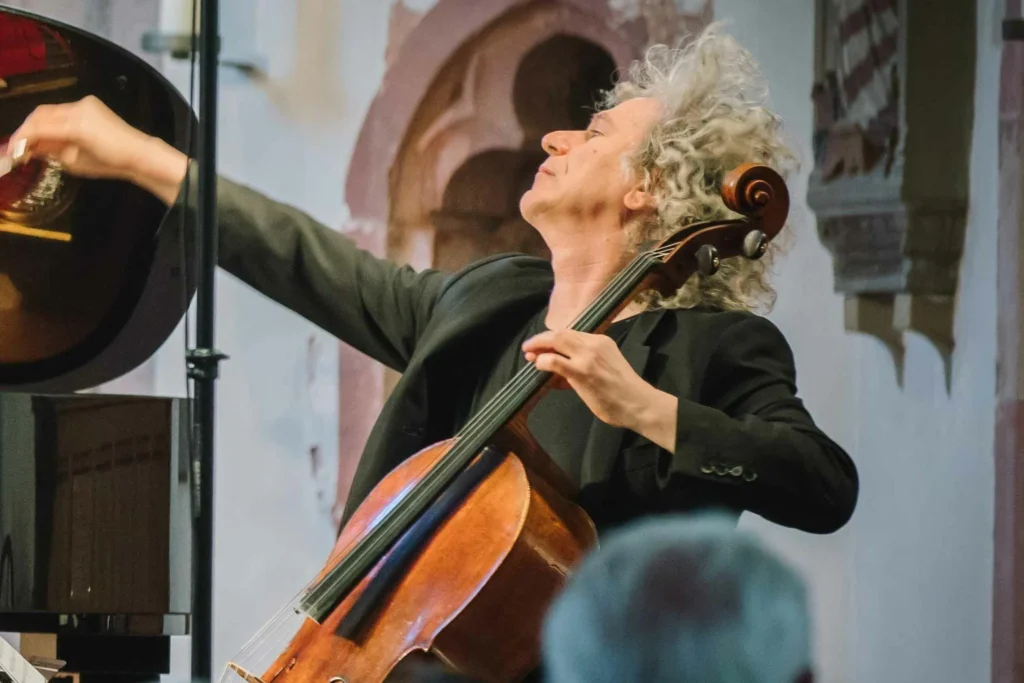
Cellist Steven Isserlis has described something similar. A significant memory lapse when he was younger contributed to an enduring fear of forgetting during performances. Interestingly, Isserlis has explained that he can feel considerably more relaxed when the music is physically in front of him. He has also made an important observation about the difference between useful excitement and excessive tension: some nervousness can reflect how much a musician cares about a performance, while too much tension can interfere with the ability to listen and respond naturally to the music.
Eddie Van Halen – Stage Fright Behind the Guitar Hero
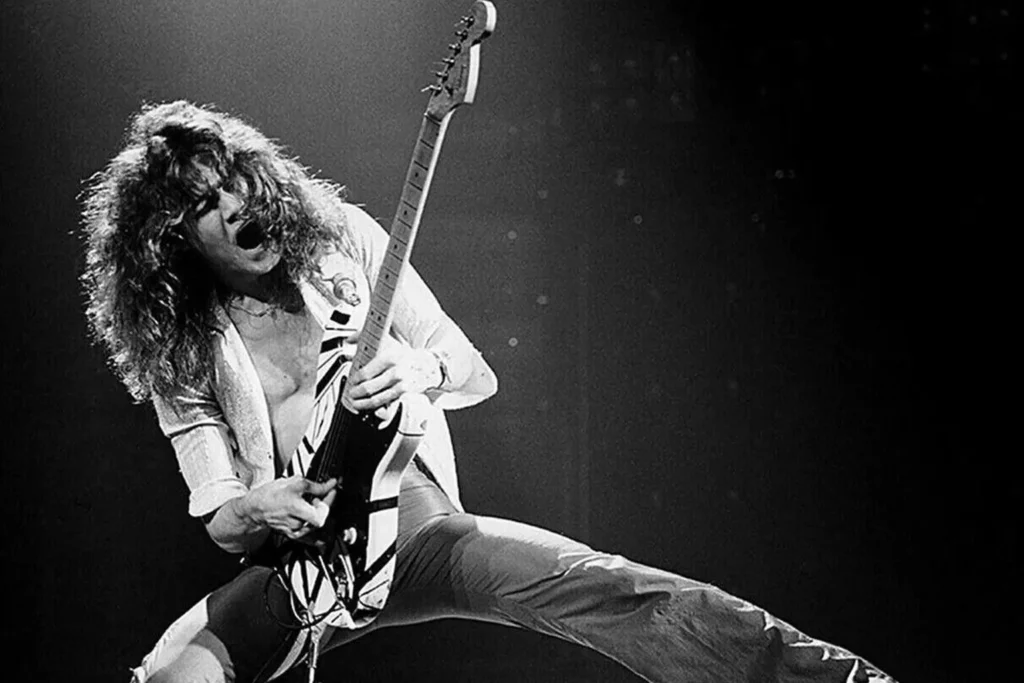
It would be difficult to watch Eddie Van Halen flying around a stage and imagine somebody frightened of performing. Yet Eddie described experiencing significant stage fright from a young age. He was an exceptionally gifted musician, but facing an audience could leave him shaking with nerves. When he asked his father how to deal with stage fright, his father offered alcohol — something Eddie initially discovered reduced his inhibitions but which ultimately became part of a serious, long-term problem.
His story illustrates the difference between reducing the sensation of anxiety and actually changing our relationship with it. Alcohol may temporarily dampen self-consciousness, but it doesn’t necessarily address the thoughts, expectations and learned responses underlying performance anxiety.
What makes Eddie’s story especially striking is the enormous contrast between those feelings and the performer audiences eventually saw. Onstage he could appear playful, spontaneous and extraordinarily free, while simultaneously producing technically remarkable guitar playing.
Confidence, therefore, isn’t always an innate personality characteristic. A musician can possess extraordinary ability while still experiencing fear about displaying that ability in front of other people. Learning to trust the skills that have already been developed can be just as important as developing the skills themselves.
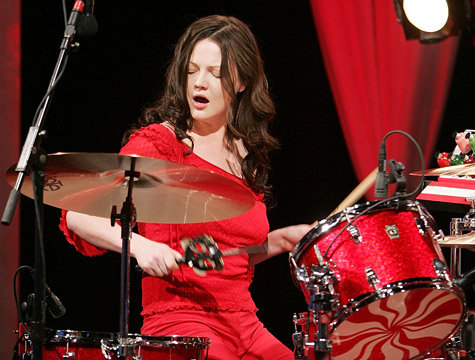
Meg White – When Performance Anxiety Affects the Whole Band
Meg White, drummer with The White Stripes, provides a very different example. In 2007, the band cancelled a series of US dates and subsequently their UK tour because Meg was experiencing acute anxiety. Jack White later explained that an intense touring schedule and limited rehearsal time before the tour had contributed to the situation.
Her experience is important because stage fright isn’t restricted to singers or musicians standing at the front of the stage. A drummer may be physically positioned behind everybody else but can still feel enormous responsibility for the performance. Anxiety can increase self-monitoring — thinking consciously about timing, mistakes or what might happen next — precisely when a musician would normally benefit from trusting skills that have become automatic through thousands of hours of playing.
Confidence that supports musicianship
Performance confidence is not certainty that every note will be perfect. Live music always contains uncertainty. More useful confidence means believing that you can stay connected to the music, adapt, recover from an imperfection and communicate something meaningful.
Perfectionism can make each note feel like a test of your worth. That creates inward attention and often makes performance less natural. We can develop a more flexible definition of success based on preparation, expression, communication and recovery. A missed note does not need to control the next phrase, and one audition result does not define your ability or future.
How hypnotherapy may help musicians
Hypnosis is a focused and absorbed state. Musicians already know absorption: the experience of becoming immersed in sound, rhythm and expression until self-consciousness recedes. Hypnotherapy can help strengthen that useful focus and change the learned associations that connect an audience, panel or stage with danger.
We can mentally rehearse the complete sequence: travelling to the venue, waiting, warming up, taking your position, hearing the opening cue and settling into the first phrase. Rehearsal is kept realistic. You do not need to imagine a flawless performance; you practise responding calmly to normal sensations and remaining engaged if something unexpected occurs.
If the problem followed a difficult concert, harsh criticism, memory lapse or embarrassing audition, we may work with the meaning your mind attached to that event. The aim is not to erase it, but to stop one past experience becoming the automatic template for every future performance.
Performance coaching, NLP and positive psychology
Performance coaching turns insight into a practical plan. We can review preparation, practice structure, self-talk, recovery and the period immediately before performing. NLP can help you notice how internal images, words, posture and breathing influence your state. Positive psychology can identify strengths, successful past performances and the conditions that help you become absorbed in the music.
A useful pre-performance routine is brief and repeatable without becoming superstitious. It might include grounding through the feet, releasing unnecessary tension, a controlled out-breath, one musical intention and a cue that directs attention outward. We can also build a rapid reset for the moment after a mistake, allowing you to rejoin the music rather than mentally remain several bars behind.
Auditions, recitals, recording sessions and live shows
The same musician may react differently in different settings. A screened orchestral audition can feel exposing because every sound is assessed. A recital may create pressure around memory and stamina. Recording can lead to repeated takes and microscopic self-criticism. A live show brings an audience, technical uncertainties and the need to recover instantly.
We will make the work specific to the event. Audition preparation may focus on beginnings, waiting and panel judgement. Recording work may address perfectionism and maintaining freshness. Live-performance coaching may emphasise connection, energy and recovery. Musicians who also act or perform in musical theatre may find the new Acting Auditions in London page useful.
Even the Great Musicians Could Experience Stage Fright
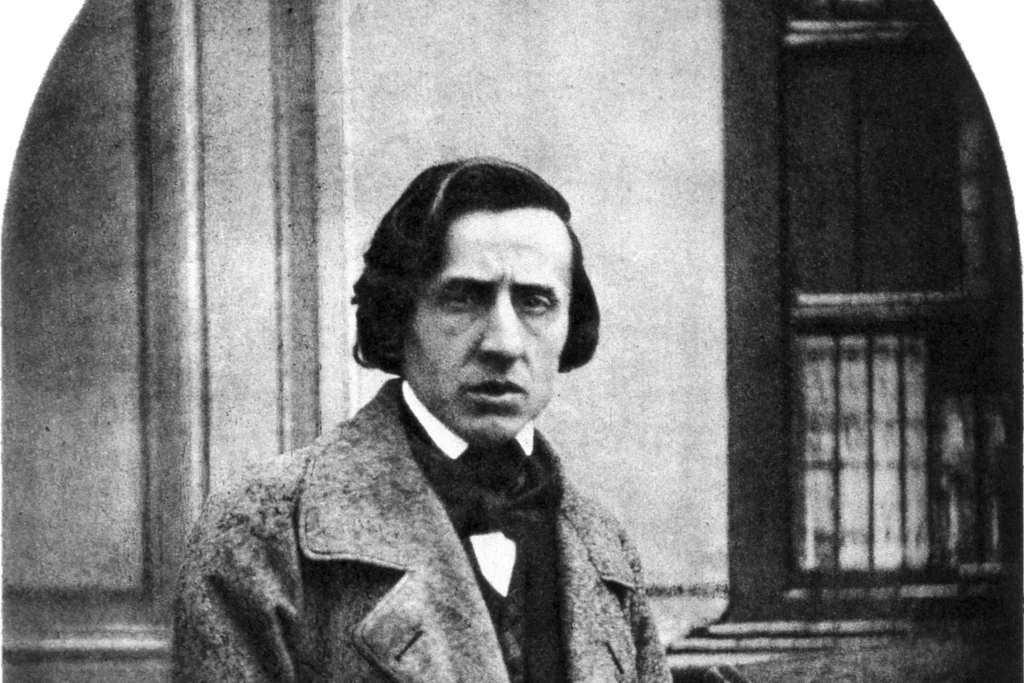
Performance anxiety certainly isn’t a modern phenomenon. Frédéric Chopin, one of history’s most celebrated pianist-composers, gave relatively few public concerts and described feeling intimidated and almost paralysed by audiences. He was considerably more comfortable performing in the smaller and more intimate salons with which he became associated. Vladimir Horowitz, despite becoming one of the most celebrated pianists of the twentieth century, also struggled with the pressures of public performance and withdrew from concert performance for substantial periods.
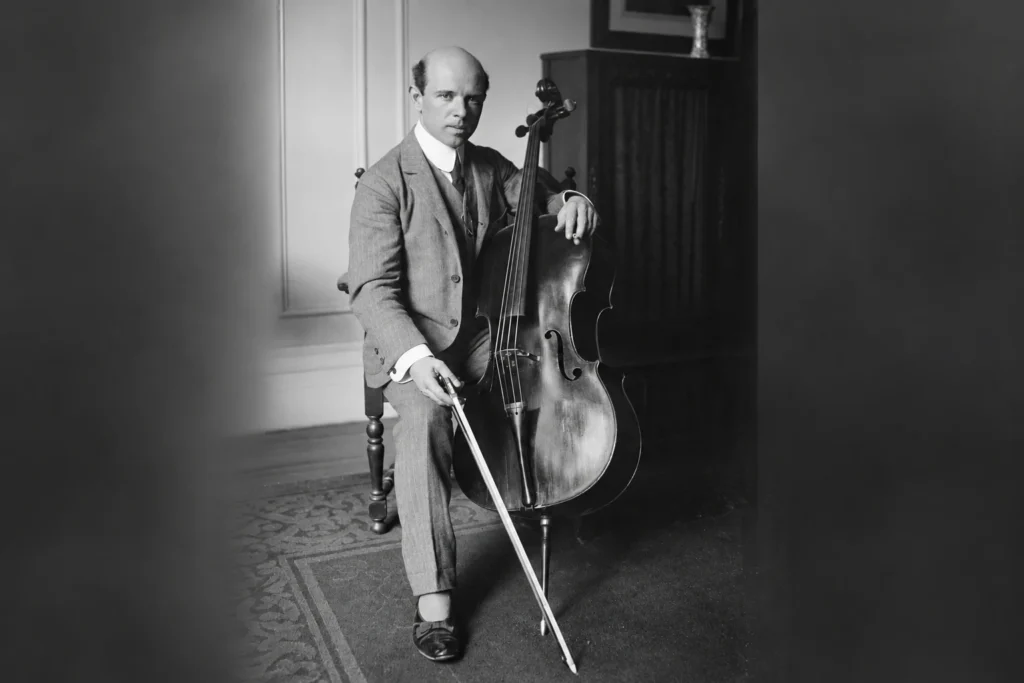
Cellist Pablo Casals is another reminder that experience doesn’t automatically eliminate nerves, while contemporary violinist Nina Lim, known professionally as Ninush, brings the story into a very different musical world. Lim studied classical violin at London’s Guildhall School of Music & Drama and has described developing severe performance anxiety during her training. She later moved beyond the purely classical environment and has performed with contemporary artists. The experiences of these very different musicians demonstrate an important principle: performance anxiety isn’t proof that someone isn’t sufficiently talented, trained or experienced. Sometimes the very importance somebody places on performing well can become part of the pressure they experience.
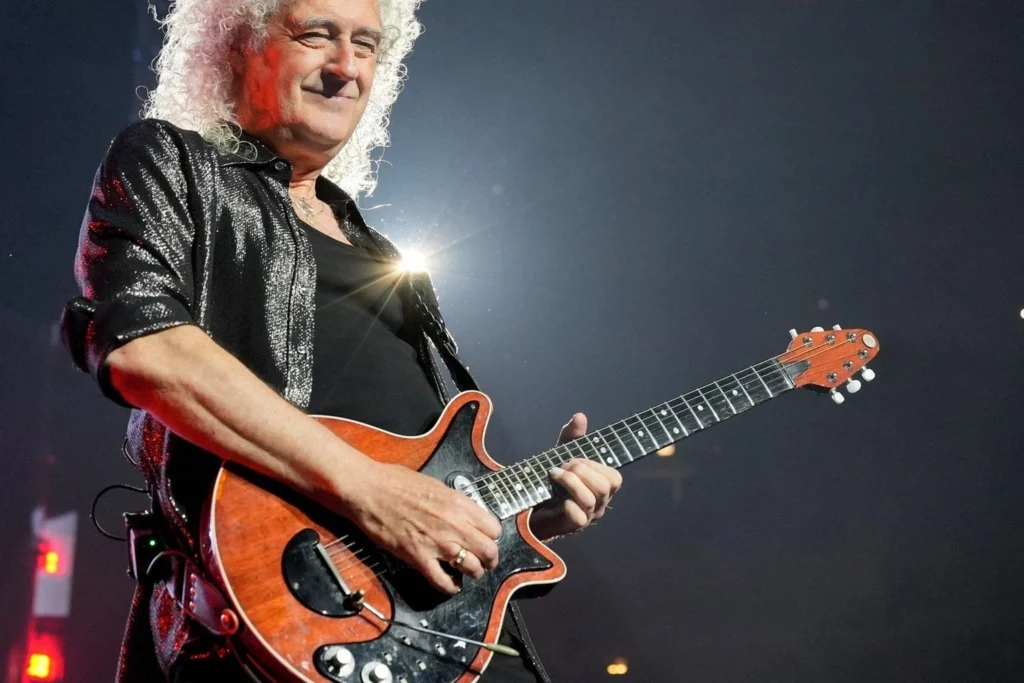
Brian May – Facing Fear at Buckingham Palace
After decades performing enormous concerts with Queen, you might imagine there wasn’t much that could frighten Brian May onstage. Then came the Queen’s Golden Jubilee in 2002 and the extraordinary idea of May standing on the roof of Buckingham Palace playing God Save the Queen.
May has subsequently described himself as being terrified. It was live, technically difficult and watched by an enormous worldwide audience. He has called it one of the most challenging musical moments of his life.
His approach is particularly relevant to performance psychology. Instead of attempting to guarantee that nothing could go wrong, May concentrated on the things he could control. He practised and rehearsed with the orchestra and prepared as thoroughly as possible before accepting that eventually he simply had to perform.
That’s a useful distinction. Confidence doesn’t necessarily require certainty. Sometimes it means preparing properly, accepting that some uncertainty remains and trusting yourself enough to perform anyway.
Worry, overthinking and sleep
Performance anxiety often begins days before the event. You may repeatedly imagine forgetting the music, losing your voice or disappointing other people. Afterwards, you may analyse every detail while discounting the parts that went well. This cycle increases stress and makes the next performance feel more threatening.
We can create a clear practice cut-off, distinguish useful preparation from anxious repetition and protect the final part of the evening for recovery. A poor night’s sleep does not automatically ruin a performance, but fear about not sleeping can make rest harder. If this has become a recurring pattern, see insomnia and poor sleep.
Music performance coaching in London
London offers exceptional opportunities through conservatoires, orchestras, West End productions, studios, clubs and venues across Soho, Camden, the South Bank, the West End and Greater London. It is exciting, but competition, travel and short-notice opportunities can make every audition feel decisive. Our work can help you treat each appearance as one meaningful part of a longer musical career.
Sessions are available for musicians in London, Reading and Didcot and online. Online sessions are especially convenient around rehearsals, touring, late performances and international schedules. They can focus on one event coming soon or a longer-standing pattern.
A practical performance plan
- Prepare thoroughly while allowing space for rest and consolidation.
- Practise starting from performance conditions, not only from comfort.
- Plan travel, equipment, clothing and warm-up requirements early.
- Choose one musical intention that moves attention towards expression.
- Use a short grounding routine before the first note.
- Afterwards, record useful learning and allow the performance to finish.
Frequently asked questions
Can you help with an audition or concert coming up soon?
Yes. Tell me the date, musical setting and main difficulty. With limited time, we can prioritise mental rehearsal, practical preparation and a routine for the day.
Will reducing nerves make my performance less exciting?
The aim is not to remove energy. It is to keep activation within a useful range so it supports timing, attention and expression rather than overwhelming them.
Can experienced professional musicians develop stage fright?
Yes. It can begin after years of successful performance, following illness, criticism, a difficult event, a long break or increased professional expectations.
Can online sessions work for musicians?
They can. Online sessions allow you to practise strategies with your instrument nearby and can fit conveniently around rehearsals, performances and travel.
Take your next step
If nerves are limiting your auditions or performances, get in touch. Tell me what you perform, what happens under pressure and whether there is a particular date ahead.
Call 07807 540142 or email me.
Music performance coaching in London, Reading, Didcot or Online
Sophie Lloyd – From Avoiding Live Performance to Playing Arenas
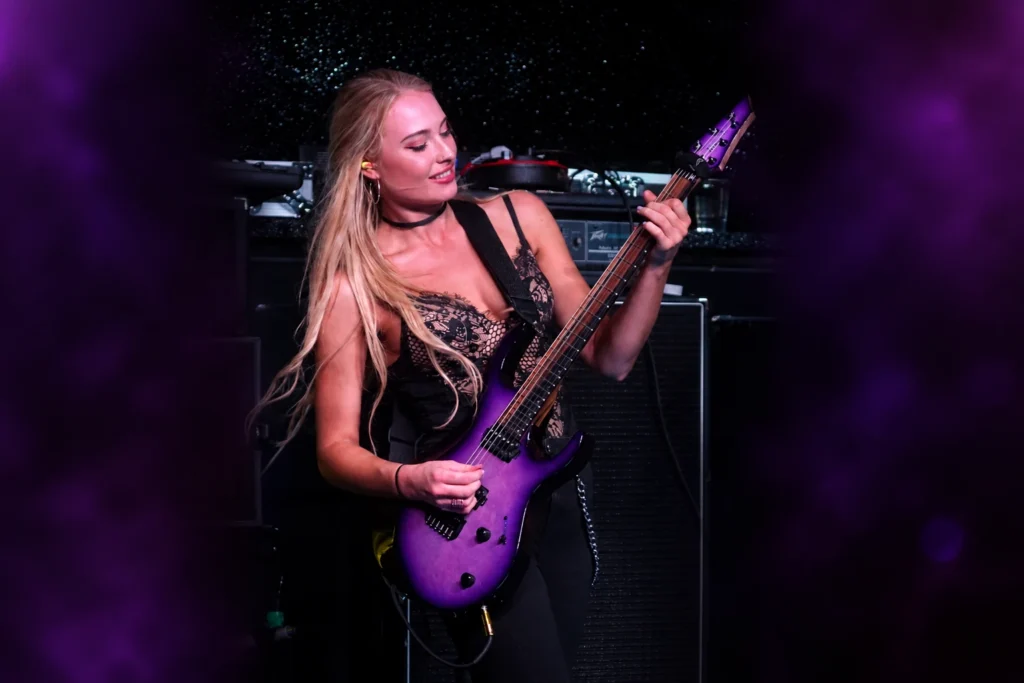
British guitarist Sophie Lloyd is a particularly interesting example of how confidence in one environment doesn’t automatically transfer into another. She built an enormous online following through guitar videos, demonstrating considerable technical ability and musical confidence on camera. Yet Lloyd has described being so uncomfortable playing live that at one point she could become nervous even playing guitar in front of her own parents. Live performance was something she preferred to avoid.
That distinction matters. Recording a performance provides control. You can stop, start again, choose another take and decide what the audience eventually sees. Walking onto a stage removes much of that control. Once the performance begins, it continues.
Lloyd’s situation changed dramatically when she joined Machine Gun Kelly’s touring band in 2022. Rather than making a gradual transition from tiny venues to progressively larger audiences, she went from relatively small performances to her first arena show in front of approximately 13,000 people. More recently, she has performed before vastly larger crowds.
Psychologically, repeated successful experiences can provide the mind with new evidence. Instead of repeatedly predicting I won’t be able to cope with this, the performer accumulates experiences demonstrating that they can.
There is another important lesson here for musicians. You don’t necessarily need to wait until you feel completely confident before performing. Sometimes confidence develops because you perform.
The ability may already be there. What changes is the musician’s relationship with being watched while using it.

Page: Auditions and Performance Coaching for Musicians.
Carmen Vandenberg – Playing Guitar When Guitarists Are Watching
For guitarist Carmen Vandenberg, performance pressure took a particularly interesting form while working with the legendary Jeff Beck. Vandenberg had already played substantial shows, but touring America with Beck created another level of pressure. She estimated that audiences could be overwhelmingly composed of guitarists — exactly the people capable of noticing every detail of what she was playing.
There was another psychological dimension too. Vandenberg has spoken about being conscious that, as a woman playing guitar in that environment, some people might assume she had been given the opportunity for reasons other than her ability. That increased her determination not to make mistakes.
Add the possibility of musicians such as Jimmy Page watching from the side of the stage, as Vandenberg recalled, and suddenly even a highly capable guitarist has plenty of material for an anxious mind to work with.
Her solution was wonderfully straightforward: practice. She practised until she felt sufficiently secure that she wasn’t going to make the mistakes she feared.
That doesn’t mean psychological approaches to performance anxiety are unnecessary. In fact, it demonstrates where they fit. Confidence coaching shouldn’t replace musical preparation. You cannot positively think your way around not knowing the material.
But once the preparation has been completed, continuing to consciously monitor every movement can become counterproductive. The objective becomes trusting the preparation sufficiently to allow the skill to operate.
For musicians, that can mean moving attention away from How am I doing? What do they think? What if I make a mistake? and back towards something considerably more useful: the music you’re actually playing.
Andy Timmons – Experience Doesn’t Always Mean Zero Nerves
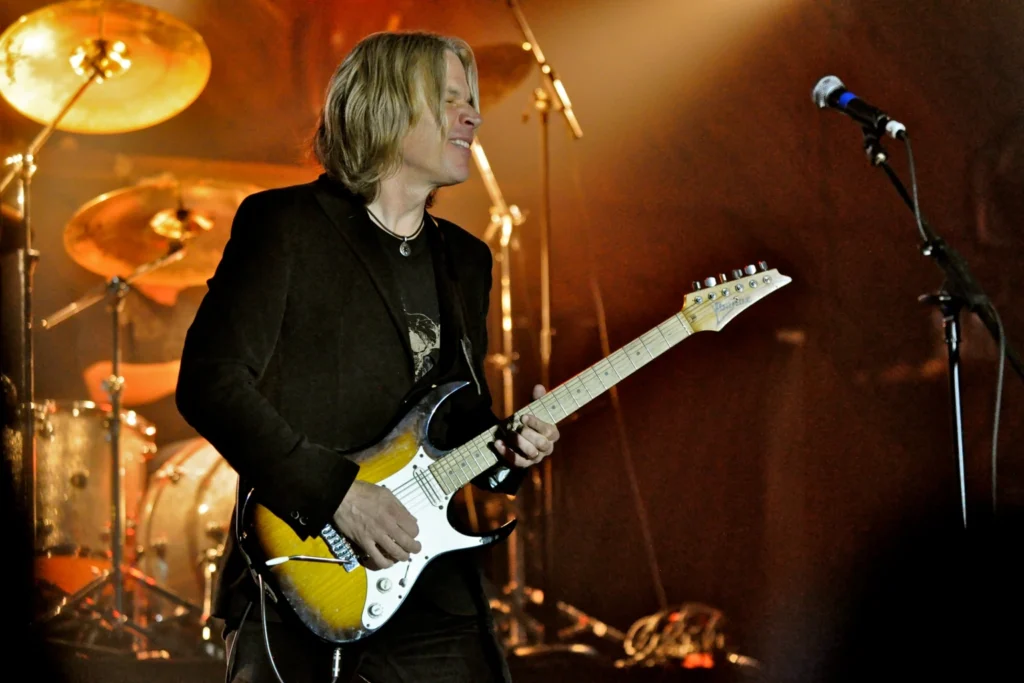
Guitarist Andy Timmons has spent decades as a professional musician, moving between solo work, bands and session playing and developing a reputation as a guitarist’s guitarist.
Yet extensive experience doesn’t necessarily produce complete immunity from performance nerves.
Timmons has discussed continuing to experience stage fright despite his years of performing. That’s useful because musicians can sometimes create an unrealistic definition of confidence: Once I’m genuinely confident, I won’t feel nervous anymore.
That isn’t necessarily how experienced performers describe it.
Instead, experience can change what the sensations mean. The racing heart or increased energy that once meant something is going wrong can eventually become a familiar indication that a performance matters and is about to begin.
This distinction is important in confidence work. Trying desperately to eliminate every trace of nervousness can paradoxically create another performance test: Am I calm enough yet?
A more useful objective may be developing sufficient trust that the musician can notice those sensations without allowing them to determine the performance.
You can be nervous and still play extremely well.
Joel Hoekstra – From Being Unable to Move to Owning the Stage
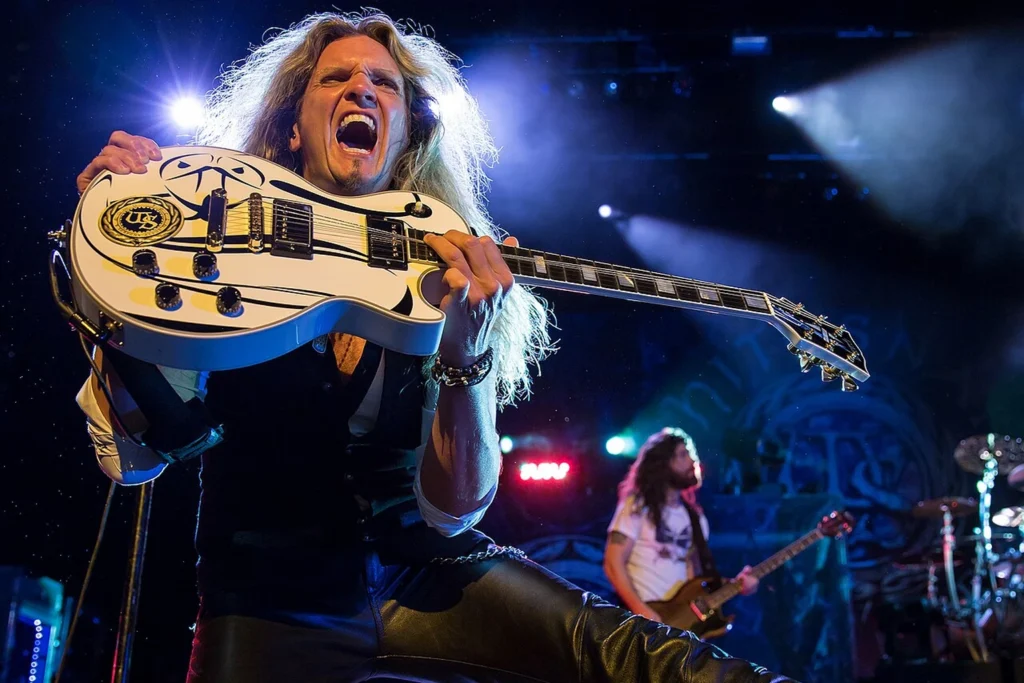
There is something particularly striking about Joel Hoekstra’s story.
The guitarist who would eventually play with Night Ranger, Whitesnake, Trans-Siberian Orchestra and Cher, as well as performing on Broadway in Rock of Ages, has described having such severe stage fright during his early performances that he literally couldn’t move his feet. At his first gig, he remembers being terrified and feeling as though his feet were cemented to the floor.
That’s remarkable considering Hoekstra subsequently became known not simply as an accomplished guitarist but as somebody with considerable stage presence.
He has also acknowledged that anxiety hasn’t magically disappeared. It’s something he can still experience.
That’s perhaps the most useful part of his story. Early stage fright didn’t predict the performer he eventually became.
The frightened teenager who couldn’t move his feet ultimately became the guitarist confidently walking around arena stages with some of the biggest names in rock.